500-600
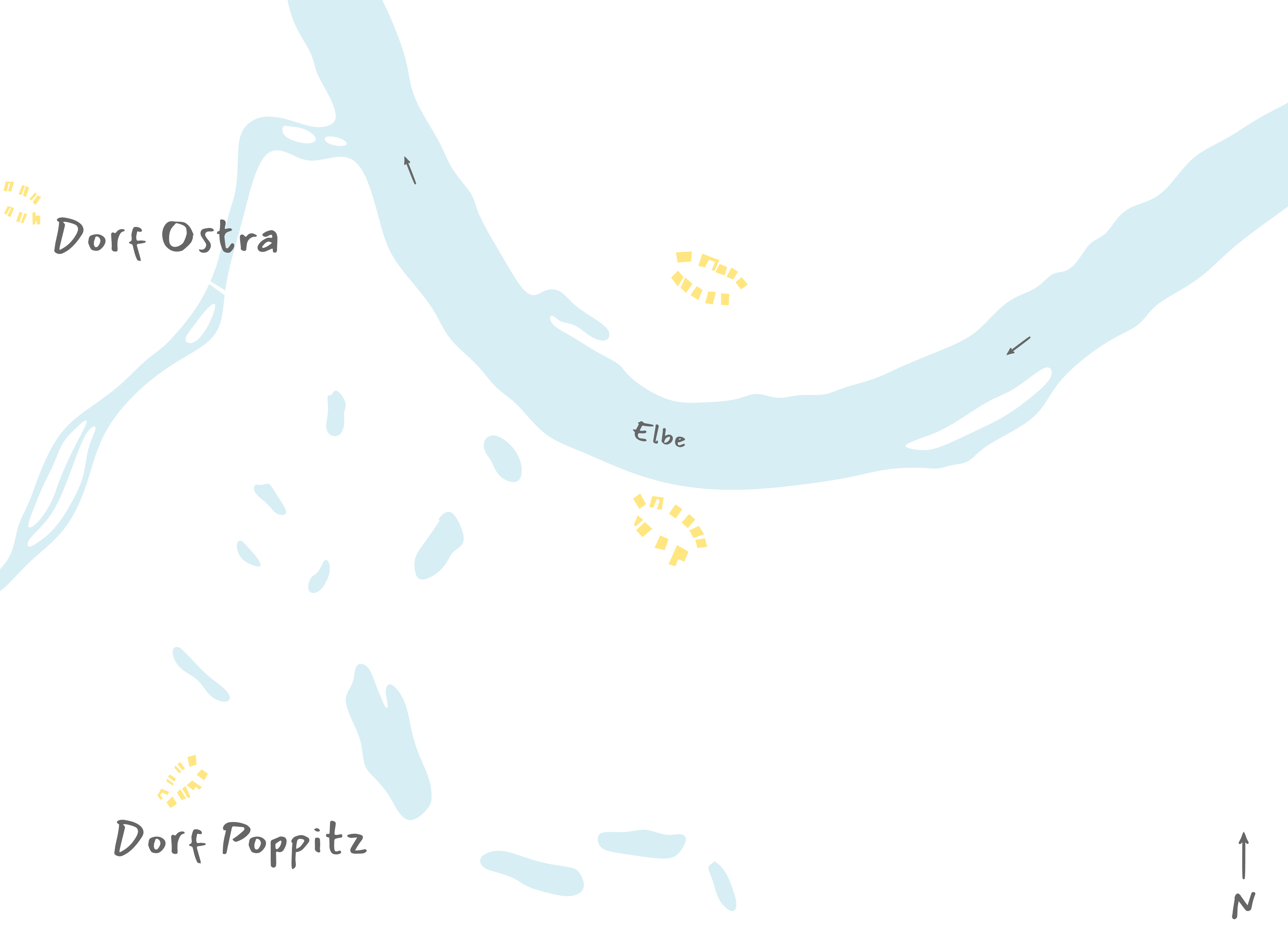
Long before stone spires rose above the Elbe, the river valley was home to the Sorbs (also known as Wenden), a West Slavic people.
The landscape consisted of wetlands, river forests, and scattered fishing and
farming settlements in areas later known as Ostra and Poppitz. Life was shaped by
the Elbe and its floodplains.
The name Dresden most likely derives from the Old Sorbian word Drežďany, meaning
"people living in the riverside forest or marshland," reflecting the environmental
conditions of the early settlement.
1206
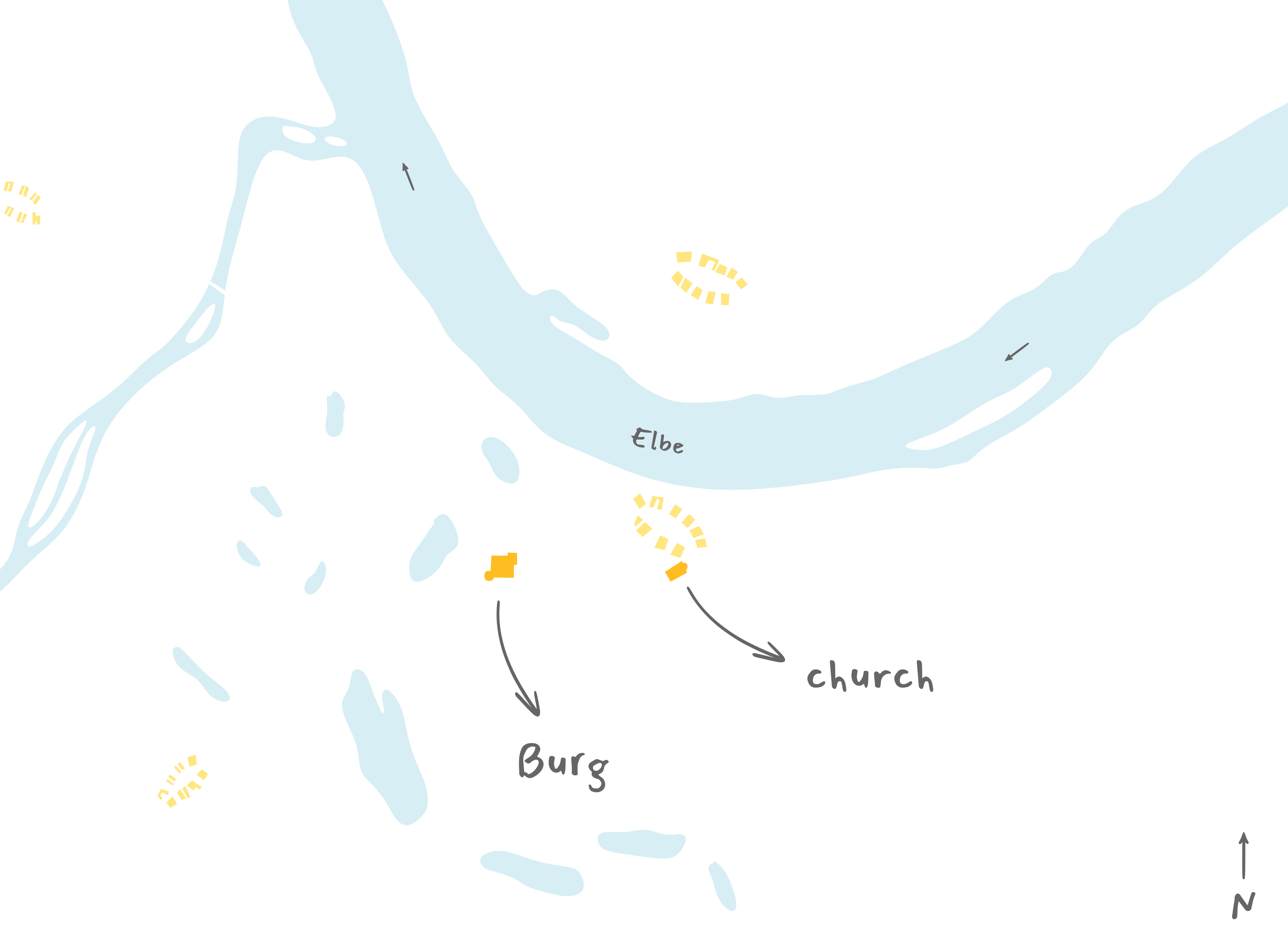
1206 marks Dresden's first recorded entry in history. The Margrave Dietrich the Oppressed established a fortified castle (Burg) and a church to secure the river crossing. This shifts simple village to a strategic military and administrative seat for the House of Wettin — the dynasty that would rule Saxony for over 800 years.
13th Century
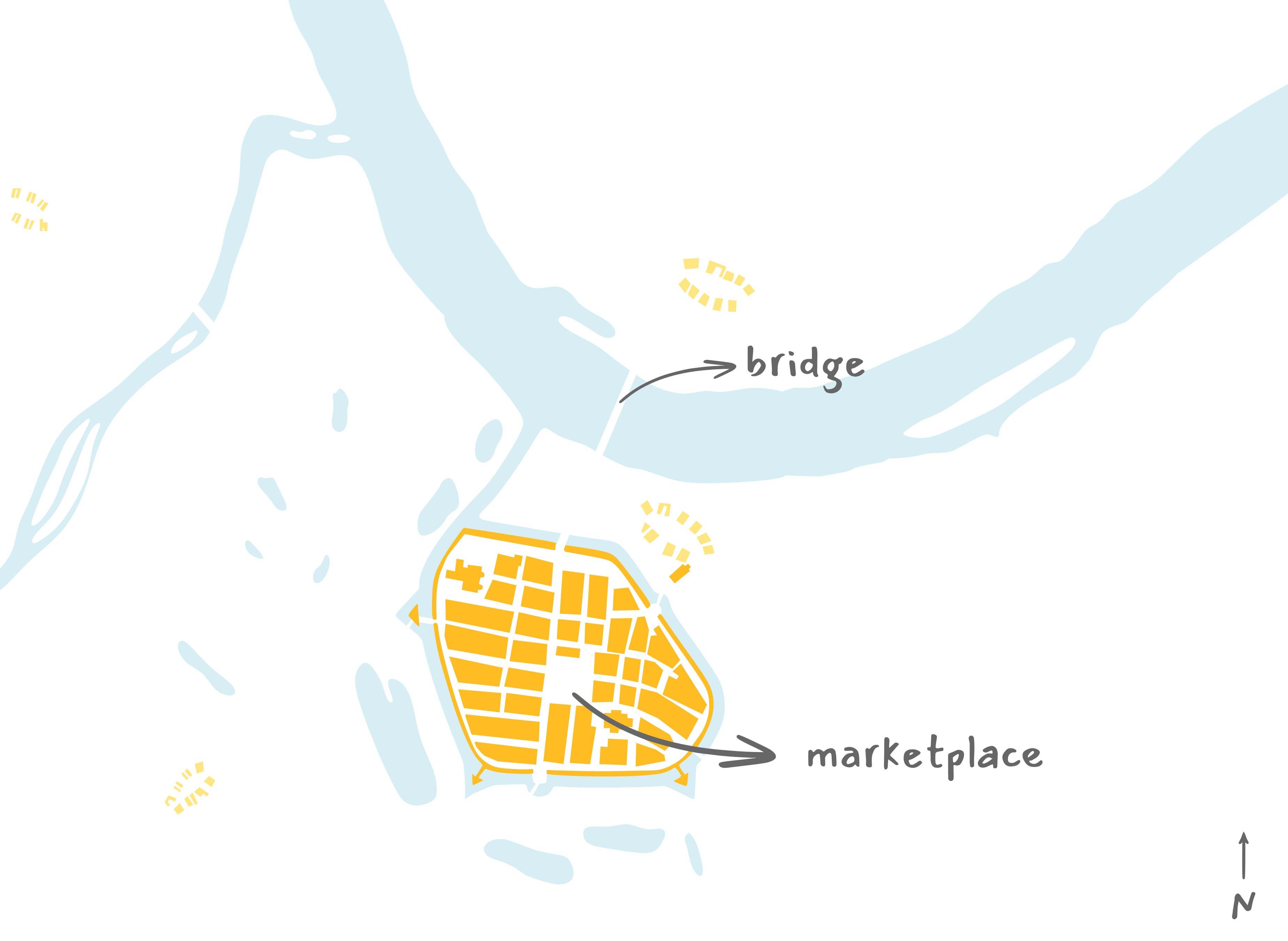
Within just a decade of its first mention, Dresden was elevated to a civitas
(city) in 1216. This period marked a massive shift as many settlers arrived,
establishing a structured marketplace and a permanent stone bridge over the Elbe.
As the Middle Ages progressed, the city
transformed into a true fortress.
The dense urban core was protected by thick stone walls and defensive towers. While
the inner city focused on trade, law, and defense, surrounding villages remained
outside the walls, acting as the city's essential agricultural backyard.
1519-1529
Under Duke George the Bearded, Dresden underwent significant modernization of its
defensive system. Between 1519 and 1529, medieval walls were reinforced and expanded
with new bastions and gates designed to withstand warfare.
Many nearby
settlements were increasingly integrated into Dresden's defensive planning. The
expanded fortifications reflected the growing power of Saxony during the Reformation
era.
1549
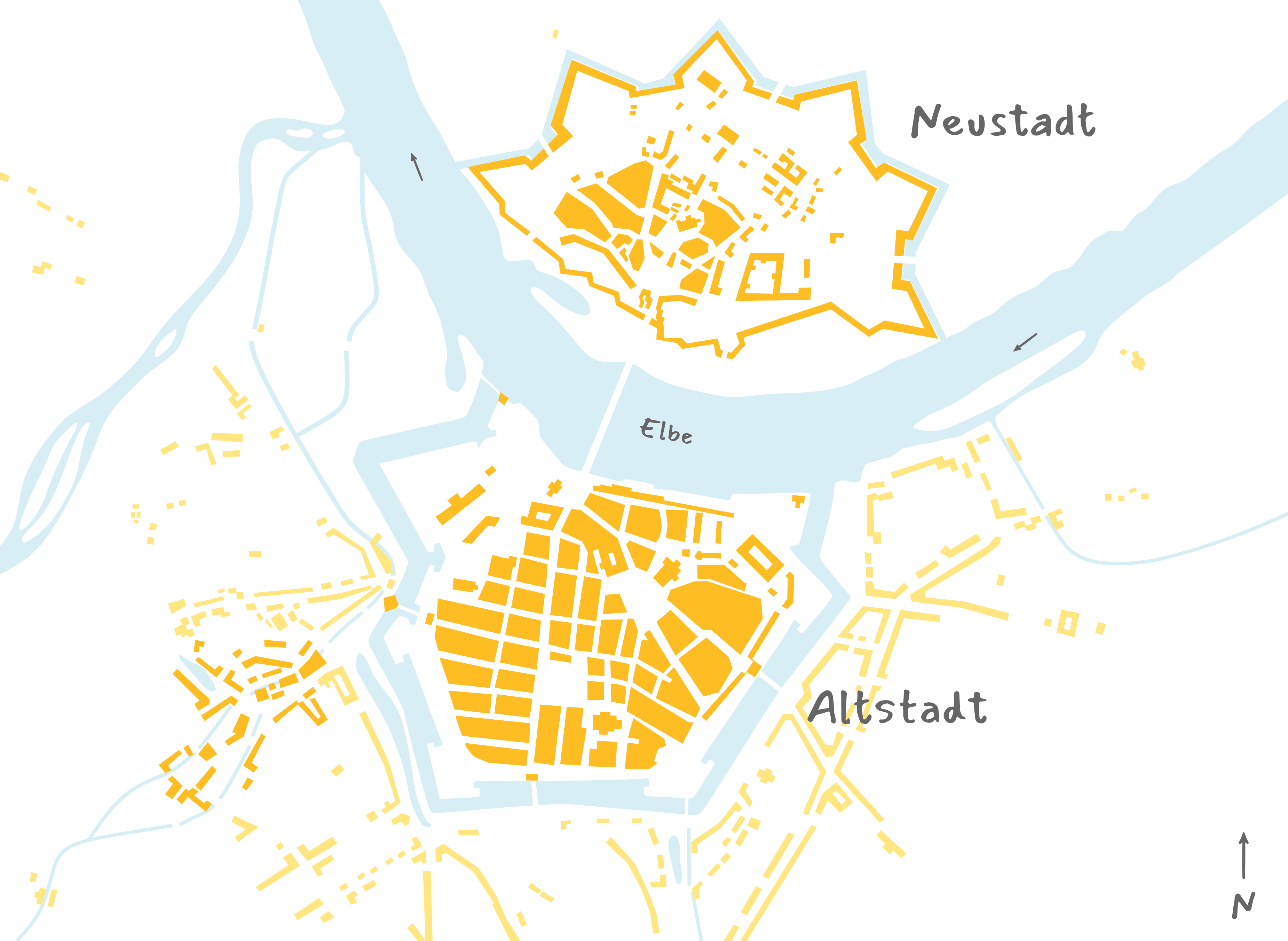
In 1549, under the Elector Moritz both parts of the city, located on two sides of the
Elbe formally unified into a single administrative entity. The southern left-bank
settlement (Altstadt) was joined with Altendresden on the northern, right bank—later
known as the Neustadt.
This unification strengthened Dresden's position as
the political center of the Electorate of Saxony. A reinforced bridge linked the
two
halves, creating a coherent river city that served as both a governmental seat and a
cultural focal point.
17th-18th Centuries
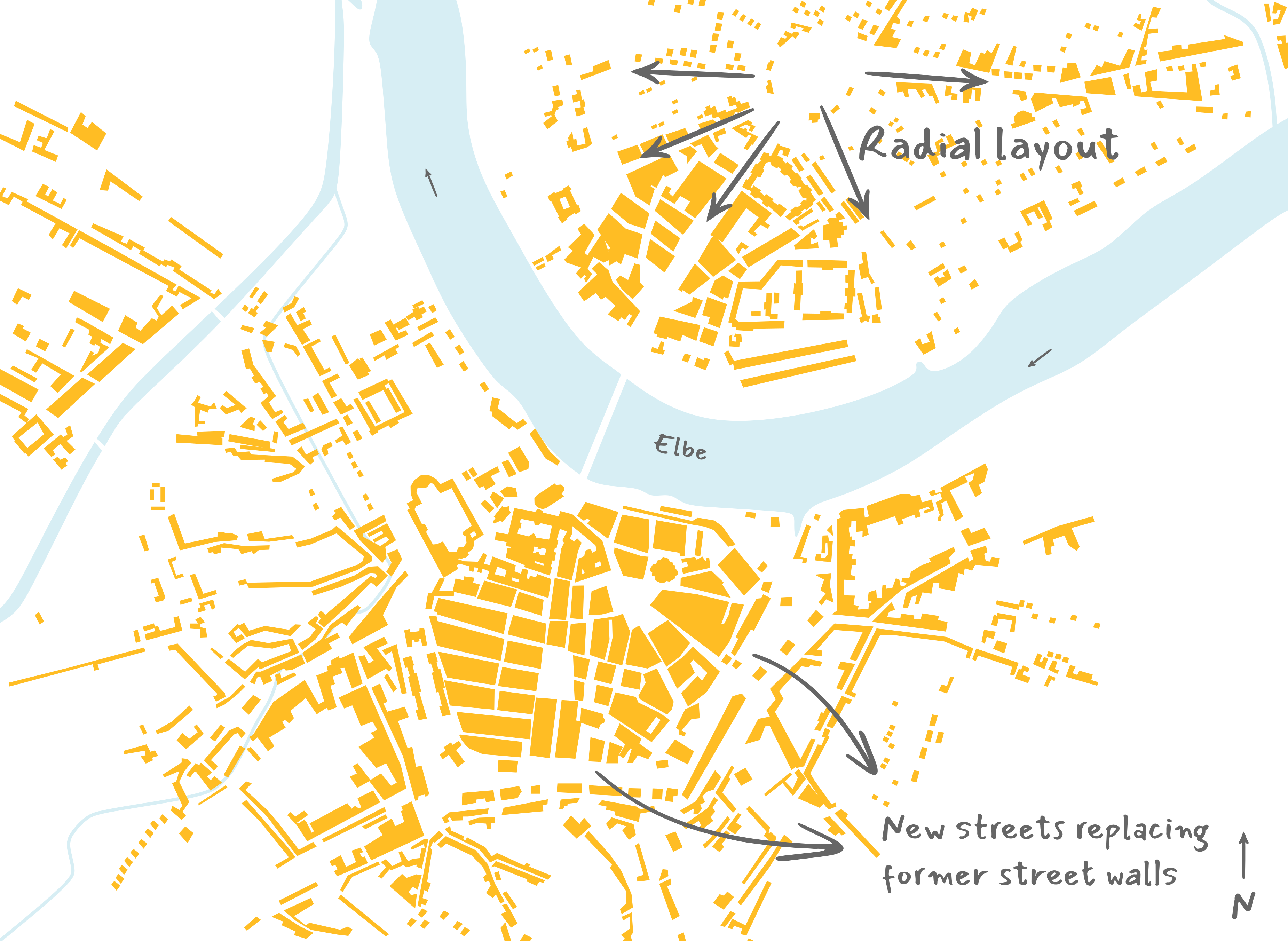
In 1685, a devastating fire destroyed large parts of Altendresden on the right bank
of the Elbe. The disaster became an opportunity for comprehensive urban redesign.
The area was rebuilt according to Baroque planning principles, featuring wide
streets and a distinctive radial layout.
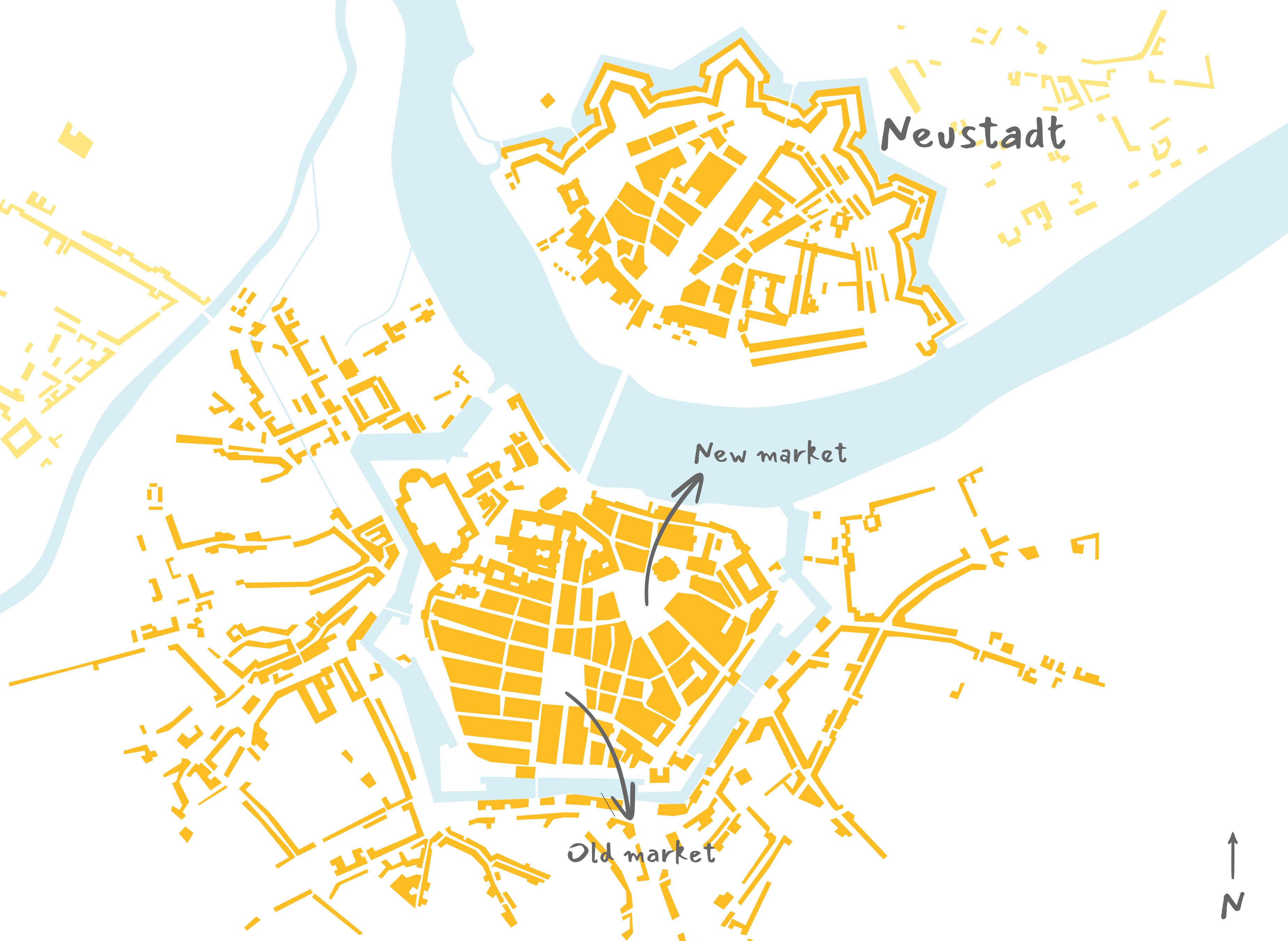
Under the rule of Augustus the Strong in the late 17th and early 18th
centuries, Dresden's Baroque transformation accelerated, earning the city its later
reputation as the "Florence on the Elbe." At this time, the fortifications reached
their greatest extent, enclosing a city of growing artistic and political ambition.
1809-1821
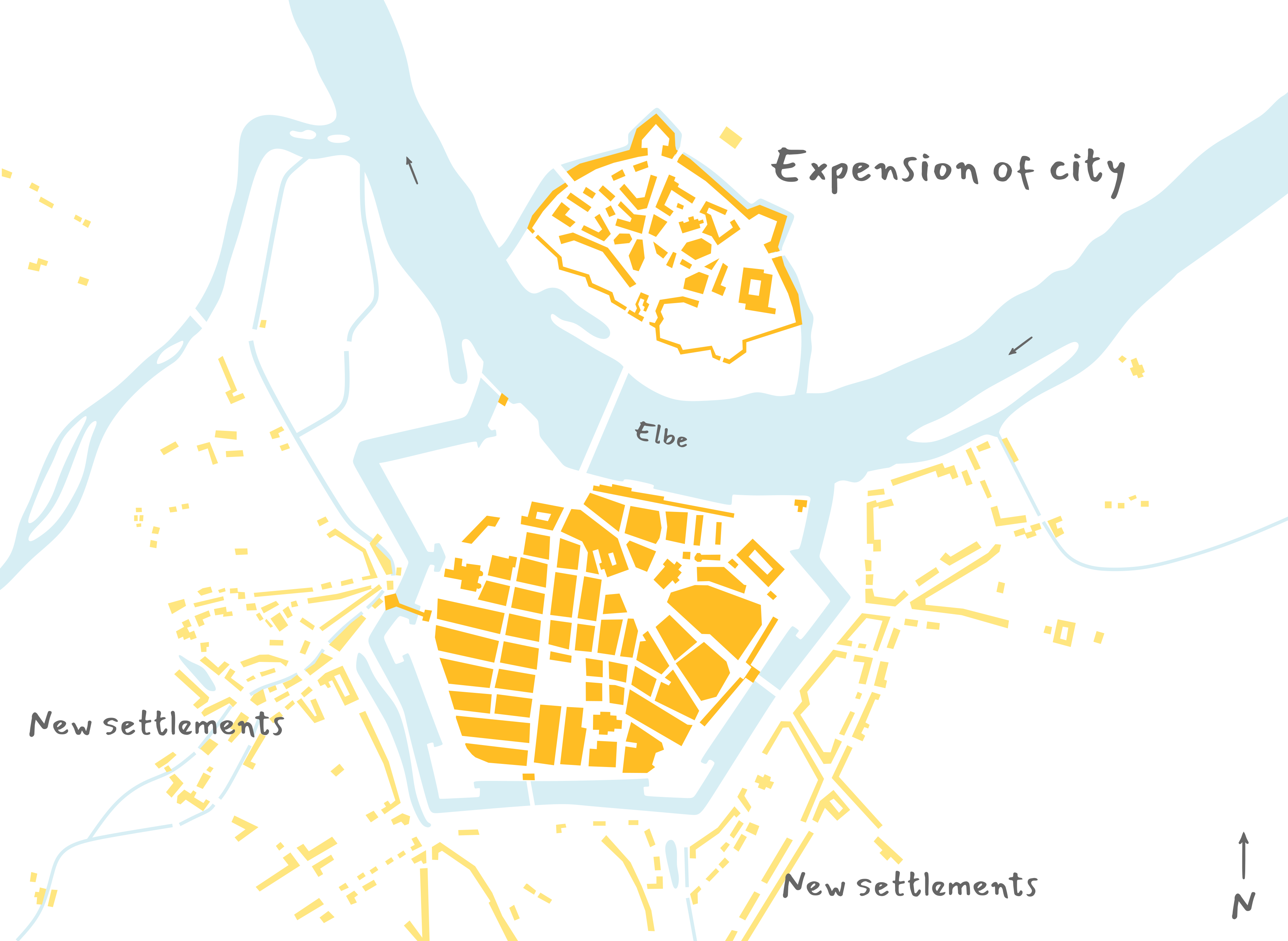
Following the Napoleonic Wars and changing military, economic, and
urban needs, Dresden's fortifications lost their strategic relevance. Between 1809
and 1821, the massive walls and bastions were systematically dismantled.
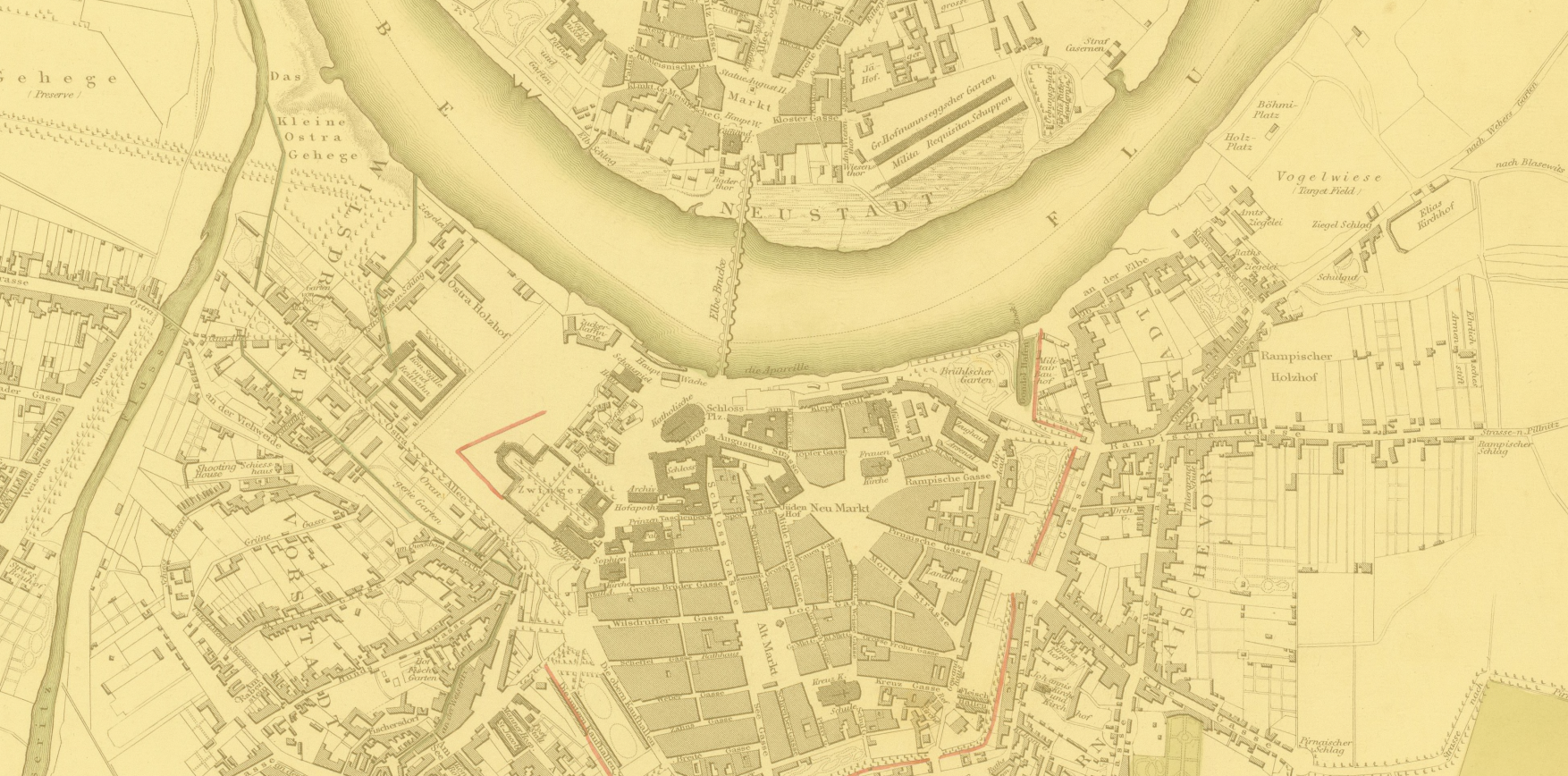
For the first time in centuries, the city expanded freely into the surrounding
landscape. Former defensive zones were transformed into boulevards, parks, and new
neighborhoods, marking Dresden's transition from a fortified stronghold into a
modern European city.